2 Corinthians 11
Paraphrased
By Dan Maines
Introduction
†
In this chapter Paul defends his apostleship because false teachers
had entered Corinth and were trying to undermine the truth he
preached.
† These men appeared impressive
outwardly, but Paul exposes them as deceptive workers who were
corrupting the simplicity of the gospel.
†
Paul reluctantly speaks about his own sufferings to show that true
ministry is marked by sacrifice, not self promotion.
2
Corinthians 11:1
I hope you'll put up with a little
foolishness from me, and honestly you've already been patient with
me.
† Paul isn't boasting for pride, he's
defending the truth because the Corinthians were being misled by
false teachers (Galatians 1:6-7).
† Sometimes
truth requires exposing deception even if it feels uncomfortable.
†
Paul calls it foolishness because boasting about oneself normally
isn't proper for a servant of Christ.
2 Corinthians
11:2
I'm jealous for you with a godly jealousy because
I promised you to one husband so I could present you as a pure bride
to Christ.
† Paul describes the church as the
bride of Christ, a covenant relationship between Christ and believers
(Ephesians 5:25-27).
† His concern is that
false doctrine will corrupt their faith before the coming judgment
that was approaching their generation.
† The
language reflects the covenant imagery found throughout the Old
Testament where God's people are described as His bride.
2
Corinthians 11:3
But I'm afraid that just as the
serpent deceived Eve with his cunning, your minds might be led away
from the simple and pure devotion to Christ.
†
Paul compares the false teachers to the serpent in Eden who twisted
truth in order to deceive (Genesis 3:1-6).
†
The danger wasn't persecution from outside but corruption from inside
the church.
† The simplicity of the gospel
means trusting Christ's finished work, not adding human traditions.
2
Corinthians 11:4
If someone comes and preaches another
Jesus than the one we preached, or if you receive a different spirit
or a different gospel than what you accepted, you tolerate it far too
easily.
† The church was showing too much
tolerance toward false teaching.
† A
different gospel is not the gospel at all, Paul warned about this
strongly elsewhere (Galatians 1:8-9).
† Even
small distortions of the gospel eventually lead to complete
corruption.
2 Corinthians 11:5
I don't
think I'm inferior to those so called super apostles.
†
Paul uses sarcasm here. These men presented themselves as superior
teachers.
† Their authority was based on
appearance and rhetoric rather than suffering for Christ.
†
Paul exposes the false pride behind their claims.
2
Corinthians 11:6
Even if I'm untrained in speaking, I'm
not lacking in knowledge. We've clearly shown this to you in every
way.
† Paul may not have had polished
rhetoric like Greek philosophers, but he had true knowledge of
Christ.
† Truth isn't measured by eloquence
but by faithfulness to God's revelation.
†
Paul's ministry had already proven itself among the Corinthians.
2
Corinthians 11:7
Did I commit a sin by humbling myself
so that you could be lifted up because I preached God's gospel to you
free of charge?
† Paul refused financial
support from the Corinthians so no one could accuse him of preaching
for profit.
† The false teachers likely used
financial gain to elevate themselves.
†
Paul's humility exposed their greed.
2 Corinthians
11:8
I robbed other churches by receiving support from
them so I could serve you.
† Paul speaks
figuratively, other churches supported him so he could minister in
Corinth.
† The Macedonian churches were
especially generous despite their poverty (2 Corinthians 8:1-4).
†
Paul's ministry was sacrificial rather than self serving.
2
Corinthians 11:9
When I was with you and needed
something, I wasn't a burden to anyone because the brothers who came
from Macedonia supplied what I needed. I kept myself from being a
burden and will continue to do so.
† Paul
protected the integrity of the gospel by refusing financial
dependence on those he was correcting.
† This
removed any accusation that he preached for personal gain.
†
True ministry often requires personal sacrifice.
2
Corinthians 11:10
As surely as the truth of Christ is
in me, this boasting won't be stopped in the regions of Achaia.
†
Paul continues defending the integrity of his ministry.
†
His confidence is rooted in Christ's truth, not personal pride.
†
The region of Achaia included Corinth and surrounding areas.
2
Corinthians 11:11
Why? Because I don't love you? God
knows I do.
† Paul's correction came from
love, not hostility.
† True spiritual
leadership sometimes requires strong warnings.
†
Love protects people from deception.
2 Corinthians
11:12
But I'll continue doing what I'm doing so I can
cut off the opportunity from those who want to be regarded as equal
with us in the things they boast about.
†
Paul refused to give false teachers any ground to claim equal
authority.
† Their motives were pride and
recognition rather than truth.
† Protecting
the church sometimes requires confronting false leadership.
2
Corinthians 11:13
These men are false apostles,
deceitful workers, disguising themselves as apostles of Christ.
†
Paul clearly identifies the problem, they were impostors.
†
False teachers often appear religious and convincing on the
surface.
† Discernment is essential for
protecting the church.
2 Corinthians 11:14
And
no wonder, because even Satan disguises himself as an angel of
light.
† Deception often looks appealing and
convincing.
† Satan rarely appears openly
evil, he appears persuasive and religious.
†
This is why truth must always be tested against Scripture.
2
Corinthians 11:15
So it's not surprising if his
servants also disguise themselves as servants of righteousness. Their
end will match their actions.
† False
teachers imitate righteousness while promoting corruption.
†
Judgment eventually exposes deception.
†
Their final outcome will reflect their works.
2
Corinthians 11:16
I repeat, no one should think I'm
foolish, but if you do, then accept me as foolish so I can boast a
little.
† Paul again explains that he doesn't
normally boast.
† He's exposing the absurdity
of the false teachers' bragging by temporarily using their own
method.
† His goal is to wake the church up
to deception.
2 Corinthians 11:17
What I'm
saying here isn't according to the Lord, but I'm speaking as if
foolishly in this confidence of boasting.
†
Paul acknowledges that boasting isn't the normal pattern for
Christian ministry.
† He's doing it
temporarily to expose the false teachers.
†
The Corinthians had been impressed by arrogant leaders.
2
Corinthians 11:18
Since many boast according to the
flesh, I'll boast as well.
† The false
teachers were boasting in outward credentials.
†
Paul shows that if boasting were the standard, he could surpass
them.
† This exposes how shallow their
standard was.
2 Corinthians 11:19
You
gladly tolerate fools since you think yourselves wise.
†
Paul points out their contradiction.
† They
considered themselves wise but were easily deceived.
†
Spiritual pride often blinds people to error.
2
Corinthians 11:20
You tolerate it if someone enslaves
you, devours you, takes advantage of you, exalts himself, or even
slaps you in the face.
† The false teachers
were exploiting the believers.
† Paul
highlights how abusive leadership had become accepted.
†
True Christian leadership serves rather than dominates.
2
Corinthians 11:21
To my shame I must say we were too
weak for that. But whatever anyone else dares to boast about, I'm
speaking foolishly, I dare to boast as well.
†
Paul sarcastically contrasts his gentle leadership with their abusive
behavior.
† He now begins describing his true
credentials.
† These credentials are
suffering, not power.
2 Corinthians 11:22
Are
they Hebrews? So am I. Are they Israelites? So am I. Are they
descendants of Abraham? So am I.
† Paul meets
them on their own terms regarding Jewish heritage.
†
His lineage was legitimate and well known.
†
Yet heritage alone never proves spiritual authority.
2
Corinthians 11:23
Are they servants of Christ? I'm
speaking like a madman, I'm even more so. I've had far greater
labors, far more imprisonments, countless beatings, and many times
near death.
† Paul's real credentials were
suffering for Christ.
† True apostleship
involved sacrifice and persecution.
† This
stands in stark contrast to self glorifying leaders.
2
Corinthians 11:24
Five times I received from the Jews
forty lashes minus one.
† Jewish law limited
flogging to thirty nine lashes to avoid exceeding forty (Deuteronomy
25:3).
† Paul endured this brutal punishment
repeatedly for preaching Christ.
† His scars
testified to his faithfulness.
2 Corinthians 11:25
Three
times I was beaten with rods, once I was stoned, three times I was
shipwrecked, and I spent a night and a day in the open sea.
†
Roman punishment included beatings with rods.
†
Stoning nearly killed Paul in Lystra (Acts 14:19).
†
These experiences show the cost of spreading the gospel.
2
Corinthians 11:26
I've often been on journeys, in
dangers from rivers, robbers, my own countrymen, Gentiles, dangers in
the city, wilderness, sea, and among false brothers.
†
Paul's ministry involved constant risk.
†
Even false believers created danger within the church.
†
The gospel advanced through perseverance.
2 Corinthians
11:27
I've experienced labor and hardship, many
sleepless nights, hunger and thirst, frequent fasting, cold and
exposure.
† Paul's life shows the sacrifice
required for ministry.
† Comfort wasn't the
goal, faithfulness was.
† His suffering
proves the sincerity of his calling.
2 Corinthians
11:28
Apart from all these external things, there's the
daily pressure on me of concern for all the churches.
†
Spiritual leadership carries emotional and spiritual burdens.
†
Paul's concern for the churches weighed on him constantly.
†
Shepherding believers requires deep care.
2 Corinthians
11:29
Who is weak without me feeling weak? Who is led
into sin without my intense concern?
† Paul
identifies personally with the struggles of believers.
†
True leaders care deeply about the spiritual health of others.
†
Their concern reflects the heart of Christ.
2
Corinthians 11:30
If I must boast, I'll boast about the
things that show my weakness.
† Paul's
strength is found in weakness.
† God's power
works through humility and dependence (2 Corinthians 12:9).
†
This completely reverses worldly ideas of leadership.
2
Corinthians 11:31
The God and Father of the Lord Jesus,
who is blessed forever, knows I'm not lying.
†
Paul calls God as witness to his truthfulness.
†
His testimony about suffering wasn't exaggerated.
†
Integrity matters in spiritual leadership.
2 Corinthians
11:32
In Damascus the governor under King Aretas was
guarding the city to arrest me.
† Paul's
persecution began very early after his conversion.
†
The authorities viewed the gospel as a threat.
†
This historical event is recorded in Acts 9.
2
Corinthians 11:33
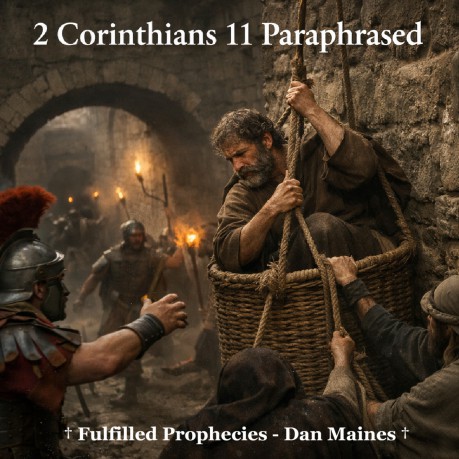
But I was lowered in a basket through
a window in the wall and escaped his hands.
†
Paul's escape from Damascus shows the danger surrounding early
Christian ministry.
† Even apostles sometimes
had to flee to preserve their lives for continued service.
†
Humility often looks weak by worldly standards but is powerful in
God's plan.
Historical References
†
Josephus describes many false teachers and deceivers appearing in
Judea before Jerusalem's destruction, misleading the people with
false promises.
† Irenaeus warned that
heretical teachers often disguised themselves as true leaders within
the church.
† Eusebius records that the early
church constantly faced false teachers who attempted to distort
apostolic doctrine.
How It Applies To Us Today
†
We must test teaching carefully because deception often appears
spiritual and persuasive.
† True Christian
leadership is marked by humility, sacrifice, and faithfulness to
Christ.
† The church must remain committed to
the simplicity of the gospel rather than being impressed by
personality or charisma.
Q & A Appendix
Q:
Why did Paul defend himself so strongly in this chapter?
A:
Because false teachers were misleading the Corinthian church and
threatening the purity of the gospel (2 Corinthians 11:3-4).
Q:
What does Paul mean by godly jealousy?
A: He
cared deeply about protecting the church's faithfulness to Christ as
a bride devoted to her husband (2 Corinthians 11:2).
Q:
Why did Paul boast about his suffering?
A: To
show that true apostleship is proven by sacrifice and endurance, not
self promotion (2 Corinthians 11:23-27).
Q:
What warning does Paul give about false teachers?
A:
They disguise themselves as servants of righteousness just as Satan
disguises himself as an angel of light (2 Corinthians 11:14-15).
Q:
What does Paul's weakness teach us about ministry?
A:
God's power works through humility and dependence rather than human
strength (2 Corinthians 11:30).
† This is the
fulfilled perspective we proclaim at Fulfilled Prophecies †
©
Fulfilled Prophecies - Dan Maines.
Source Index
†
2 Corinthians 11
† Josephus, Antiquities of
the Jews
† Irenaeus, Against Heresies
†
Eusebius, Ecclesiastical History
Links