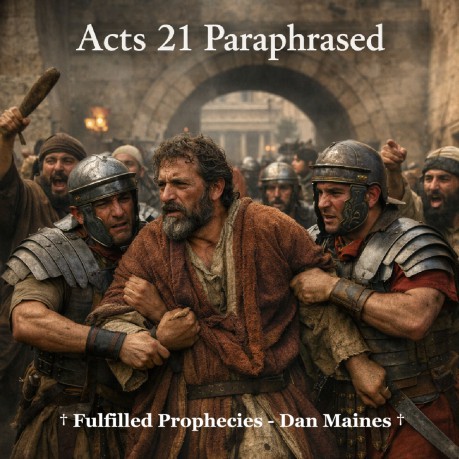
Acts 21 Paraphrased Introduction Acts 21:1 Acts 21:2 Acts 21:3 Acts 21:4 Acts 21:5 Acts 21:6 Acts 21:7 Acts 21:8 Acts 21:9 Acts 21:10 Acts 21:11 Acts 21:12 Acts 21:13 Acts 21:14 Acts 21:15 Acts 21:16 Acts 21:17 Acts 21:18 Acts 21:19 Acts 21:20 Acts 21:21 Acts 21:22 Acts 21:23 Acts 21:24 Acts 21:25 Acts 21:26 Acts 21:27 Acts 21:28 Acts 21:29 Acts 21:30 Acts 21:31 Acts 21:32 Acts 21:33 Acts 21:34 Acts 21:35 Acts 21:36 Acts 21:37 Acts 21:38 Acts 21:39 Acts 21:40 Historical References How it applies to us today Q & A Appendix † This is the fulfilled perspective we proclaim at
Fulfilled Prophecies † Source Index
By Dan Maines
† This
chapter shows Paul moving toward Jerusalem knowing suffering awaits
him
† It reveals the tension between
prophecy, obedience, and the will of God
† It
also shows the growing hostility of the Jews leading to his arrest
After we separated from them, we
sailed straight to Cos, then to Rhodes, and from there to Patara
†
Paul is moving with urgency, showing determination to reach Jerusalem
(Acts 20:22-23)
† The direct travel route
shows intentional obedience, not hesitation
†
Luke records details to show this is real history, not symbolic
Finding a ship crossing to
Phoenicia, we boarded and set sail
† God is
opening the path step by step for Paul’s journey
†
The mission continues through ordinary means, ships, travel,
planning
† The gospel advances through
real-world movement, not mystical transport
After sighting Cyprus and leaving
it on the left, we sailed to Syria and landed at Tyre, where the ship
unloaded cargo
† The mention of Cyprus ties
back to earlier mission work (Acts 13:4-5)
†
The gospel has already reached these regions, showing expansion
†
Trade routes become gospel routes
After finding the disciples, we
stayed there seven days, and they kept telling Paul through the
Spirit not to go to Jerusalem
† The warning
is real, suffering is coming, not avoided
†
The Spirit reveals danger, but doesn’t forbid obedience
†
This shows prophecy reveals events, not always commands
When our days were over, we left
and continued, and they all, with wives and children, escorted us to
the shore, kneeling and praying
† The church
is unified in love and prayer
† Families are
involved, showing the gospel affects households
†
Prayer surrounds Paul’s mission, even in danger
After saying farewell, we boarded
the ship, and they returned home
† Separation
is part of ministry, relationships are real
†
The work continues even when fellowship ends temporarily
†
The mission is bigger than one location
We finished the voyage from Tyre
and arrived at Ptolemais, greeted the brothers, and stayed one day
†
Fellowship continues across cities, one body in many places
†
Short stays still matter, every connection strengthens the church
†
The gospel has spread widely by this point
The next day we left and came to
Caesarea, entering the house of Philip the evangelist, one of the
seven, and stayed with him
† Philip connects
back to Acts 6 and Acts 8
† The gospel has
moved from Jerusalem to Samaria and beyond
†
The early servants became evangelists
He had four virgin daughters who
prophesied
† This shows the active role of
women in the early church
† Prophecy here is
revelatory before completion of the New Covenant writings
†
The Spirit was active in guiding the church at that time
As we stayed many days, a prophet
named Agabus came down from Judea
† Agabus
previously predicted famine (Acts 11:28)
†
This establishes credibility of prophetic warning
†
God is consistently revealing what’s about to happen
He took Paul’s belt, bound his
own hands and feet, and said the Holy Spirit says the Jews in
Jerusalem will bind the owner of this belt and hand him to the
Gentiles
† This is a symbolic prophecy like
Old Testament prophets
† The message is
clear, suffering and arrest are certain
† It
mirrors what happened to Christ
When we heard this, we and the
locals begged him not to go to Jerusalem
†
Human concern reacts naturally to danger
†
Even believers can resist God’s plan out of love
†
Emotion doesn’t override obedience
Paul answered, why are you
weeping and breaking my heart, I am ready not only to be bound but
even to die in Jerusalem for the name of the Lord Jesus
†
Paul’s commitment reflects Christ’s path to Jerusalem (Luke
9:51)
† He values obedience over comfort
†
This is true discipleship, willingness to suffer
Since he wouldn’t be persuaded,
we stopped and said the will of the Lord be done
†
Submission replaces resistance
† God’s will
includes suffering, not just blessing
† This
is the correct response to God’s revealed plan
After these days, we prepared and
went up to Jerusalem
† The journey continues
despite warnings
† Preparation shows
intentional obedience
† Paul is walking into
prophecy
Some disciples from Caesarea went
with us, bringing us to Mnason of Cyprus, an early disciple, with
whom we would stay
† Early disciples are
still active years later
† Hospitality is
central to the church
† The faith has deep
roots by this time
After arriving in Jerusalem, the
brothers welcomed us gladly
† The church
still receives Paul warmly
† Unity exists
despite coming conflict
† Jerusalem remains a
central hub
The next day Paul went with us to
James, and all the elders were present
†
James leads the Jerusalem church (Galatians 2:9)
†
Leadership structure is clear and established
†
Paul reports to them in unity
After greeting them, he reported
one by one what God had done among the Gentiles through his
ministry
† The focus is on what God did, not
Paul
† The Gentile mission is validated
†
This fulfills prophecy of nations coming in (Isaiah 49:6)
When they heard it, they
glorified God and said you see, brother, how many thousands among the
Jews have believed, and they’re all zealous for the law
†
Jewish believers still held strong attachment to the law
†
Transition from Old to New Covenant is still unfolding
†
This creates tension within the church
They’ve been told you teach
Jews among the Gentiles to abandon Moses, telling them not to
circumcise their children or follow customs
†
False accusations are rising against Paul
†
Misunderstanding of grace leads to conflict
†
This reflects ongoing covenant transition
What then, they’ll certainly
hear you’ve come
† Conflict is inevitable
†
Reputation matters in the early church
†
Leadership seeks to manage perception
So do what we tell you, we have
four men under a vow
† They propose a public
act to show Paul respects the law
† This is
about unity, not salvation
† It reflects
cultural sensitivity
Take them, purify yourself with
them, and pay their expenses so they can shave their heads, then
everyone will know there’s no truth to what they’ve heard about
you
† This is a strategic move to avoid
offense
† Paul adapts without compromising
the gospel (1 Corinthians 9:20)
† The goal is
peace among believers
But regarding Gentiles who have
believed, we’ve sent our decision that they should abstain from
idols, blood, strangled things, and sexual immorality
†
The earlier council decision stands (Acts 15)
†
Gentiles are not under the law of Moses
†
Unity is maintained through clear boundaries
Then Paul took the men, purified
himself, and entered the temple, giving notice when the days of
purification would end
† Paul participates
without denying the gospel
† This shows
flexibility, not compromise
† The temple
still stands at this point
When the seven days were nearly
over, Jews from Asia saw him in the temple and stirred up the whole
crowd, laying hands on him
† Opposition
follows Paul everywhere
† The same pattern
repeats, accusation, crowd, violence
† This
fulfills the warnings given earlier
Crying out, men of Israel, help,
this is the man who teaches everyone everywhere against our people,
law, and this place, and he’s brought Greeks into the temple and
defiled it
† False charges escalate the
situation
† Fear and nationalism drive the
mob
† The temple becomes the center of
conflict
They had previously seen
Trophimus the Ephesian with him in the city and assumed Paul brought
him into the temple
† Assumptions lead to
violence
† No evidence is needed for mob
action
† This shows the irrational nature of
persecution
The whole city was stirred, and
the people rushed together, seizing Paul and dragging him out of the
temple, and immediately the doors were shut
†
This is the rejection of the gospel by Israel
†
The shutting of the temple doors is symbolic of judgment coming
†
This leads toward the destruction in AD 70
While they were trying to kill
him, a report came to the commander that all Jerusalem was in chaos
†
Roman authority intervenes
† This prevents
immediate death
† God uses even pagan systems
to preserve Paul
He immediately took soldiers and
centurions and ran down to them, and when they saw the commander and
soldiers, they stopped beating Paul
† Fear of
Rome stops the mob
† Authority restrains
chaos
† God’s timing preserves Paul’s
life
Then the commander came, arrested
him, and ordered him bound with two chains, asking who he was and
what he had done
† This fulfills Agabus’
prophecy exactly
† Paul is now in custody
†
God’s word proves true
Some shouted one thing and some
another, and since he couldn’t learn the facts because of the
uproar, he ordered Paul to be brought into the barracks
†
Confusion dominates the crowd
† Truth is lost
in noise
† Authority seeks clarity but finds
chaos
When he reached the steps, he had
to be carried by the soldiers because of the violence of the mob
†
The intensity of hatred is extreme
† Paul is
completely at their mercy
† This mirrors
Christ’s suffering
The crowd kept following,
shouting away with him
† This echoes Luke
23:18
† The same spirit that rejected Christ
rejects His messengers
† Judgment on that
generation is near
As Paul was about to be brought
into the barracks, he said to the commander, may I say something to
you, and he said do you know Greek
† Paul
reveals his education and background
† This
surprises the commander
† Paul is not who
they assumed
Then you’re not the Egyptian
who stirred up a revolt and led four thousand assassins into the
wilderness
† Rome feared rebellion
constantly
† Paul is mistaken for a known
agitator
† This shows political tension in
the region
Paul said I am a Jew from Tarsus
in Cilicia, a citizen of an important city, I ask you, allow me to
speak to the people
† Paul uses his identity
wisely
† He seeks to address the crowd
directly
† This sets up his testimony
After receiving permission, Paul
stood on the steps and motioned with his hand, and when there was a
great silence, he spoke to them in the Hebrew dialect
†
Paul takes control of the moment
† Speaking
Hebrew gains their attention
† This prepares
for his defense in the next chapter
†
Josephus records similar temple riots and Jewish unrest leading up to
AD 70
† Eusebius notes the persecution of
apostles in Jerusalem during this period
†
Clement of Alexandria speaks of Paul’s sufferings as part of his
witness
†
Obedience to God doesn’t mean avoiding suffering
†
Truth will always face opposition from religious systems
†
God’s will is greater than our comfort or safety
†
We’re called to stand firm even when misunderstood
†
The mission continues no matter the cost
Q: Why
did Paul go to Jerusalem knowing danger awaited?
A:
He was compelled by the Spirit and willing to suffer for Christ (Acts
20:22-23)
Q: Was the Spirit telling Paul not to
go?
A: No, the Spirit revealed what would
happen, not that he shouldn’t go (Acts 21:11)
Q:
Why did Paul participate in temple rituals?
A:
To avoid unnecessary offense and maintain unity among Jewish
believers (1 Corinthians 9:20)
Q: Why was Paul
falsely accused?
A: The Jews misunderstood his
teaching and reacted with hostility (Acts 21:28)
Q:
What does this chapter show about Israel?
A: It
shows continued rejection of the gospel leading toward judgment
(Matthew 23:36-38)
© Fulfilled Prophecies - Dan
Maines.
† Acts 21
†
Josephus, Wars of the Jews
† Eusebius,
Ecclesiastical History
† Clement of
Alexandria, Stromata
Links