The
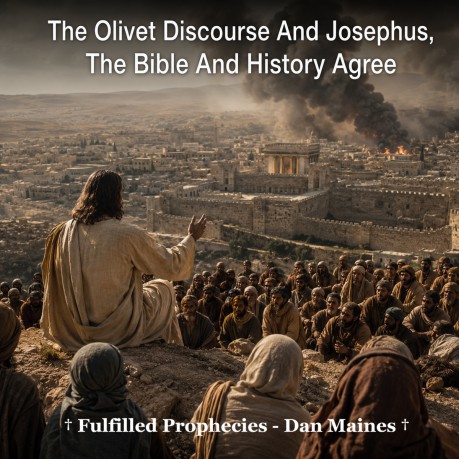
Olivet Discourse And Josephus, The Bible And History Agree Introduction † Many people
claim the Olivet Discourse is about our future, but Jesus repeatedly
said these things would happen in that generation. The destruction of
Jerusalem in AD 70 matches the very things Jesus warned about in
Matthew 24, Mark 13, and Luke 21. † One of the
greatest historical witnesses outside the Bible was Flavius Josephus,
a Jewish historian who lived through the Roman war and recorded the
destruction of Jerusalem in detail. † What
Josephus described lines up directly with the words of Christ. The
famine, false prophets, civil wars, surrounding armies, tribulation,
burning temple, and millions trapped in Jerusalem were not future
events. They happened exactly as Jesus said they would. The Temple Would Be
Destroyed Matthew 24:1-2
1 Jesus left the temple area and was going on His way when His
disciples came up to point out the temple buildings to Him. 2 But
He responded and said to them, "Do you not see all these things?
Truly I say to you, not one stone here will be left upon another,
which will not be torn down." † Jesus was
speaking about the literal temple standing in front of them, not a
future rebuilt temple thousands of years later. † Josephus
recorded that the Romans completely destroyed the temple during the
siege of Jerusalem. The buildings were burned and dismantled so
thoroughly that the city looked as though it had never been
inhabited. (Wars of the Jews, Book 7, Chapter 1) † Titus
originally wanted to preserve parts of the temple, but the
destruction became unstoppable during the war. This fulfilled
Christ's prophecy exactly. (Luke 19:43-44) Wars And Rumors Of Wars Matthew 24:6-7
6 And you will be hearing of wars and rumors of wars. See that
you are not alarmed, for those things must take place, but that is
not yet the end. 7 For nation will rise against nation, and
kingdom against kingdom, and there will be famines and earthquakes in
various places. † The years
leading up to AD 70 were filled with revolts, uprisings,
assassinations, and civil unrest throughout the Roman Empire. † Josephus
described violent rebellions and internal bloodshed throughout Judea
before Jerusalem fell. (Wars of the Jews, Book 4) † Roman
historians such as Tacitus and Suetonius also recorded unrest,
instability, and disasters during Nero's reign, exactly matching the
period Jesus described. (Romans 8:22; Luke 21:9-11) † Josephus
also recorded fierce civil war within Jerusalem itself, where Jewish
factions murdered one another while the Romans surrounded the city.
(Wars of the Jews, Book 5) False Prophets And
Deception Matthew 24:11
11 And many false prophets will rise up and mislead many people.
† Josephus
repeatedly warned about false prophets deceiving the people during
the siege of Jerusalem. † He wrote
that false prophets convinced the people God would deliver them if
they stayed in the city, leading many to their deaths. (Wars of the
Jews, Book 6, Chapter 5) † Jesus warned
His followers ahead of time so they wouldn't be deceived by these
claims. (Matthew 24:23-26) Jerusalem Surrounded By
Armies Luke 21:20-21
20 "But when you see Jerusalem surrounded by armies, then
recognize that her desolation is near. 21 Then those who are in
Judea must flee to the mountains, and those who are inside the city
must leave, and those who are in the country must not enter the city;
† This was not
symbolic language. Jesus gave an actual warning sign for believers
living in Judea. † Jesus
specifically said those in Judea were to flee to the mountains,
proving this was a local first century judgment centered on
Jerusalem, not the end of the physical planet. (Matthew 24:16) † In AD 66,
the Roman armies surrounded Jerusalem under Cestius Gallus, but
unexpectedly withdrew for a short time. † Early
Christians reportedly escaped during this opportunity and fled to
Pella before the final destruction came. Eusebius later recorded this
historical tradition. (Ecclesiastical History, Book 3, Chapter 5) Days Of Vengeance Luke 21:22
22 because these are days of punishment, so that all things
which have been written will be fulfilled. † Jesus said
all things written would be fulfilled in those days, not thousands of
years later. † The
destruction of Jerusalem was covenant vengeance for rejecting the
Messiah and persecuting the prophets. (Matthew 23:34-38) † This
directly refutes the idea that most biblical prophecy remains
unfulfilled. Great Tribulation Matthew 24:21
21 For then there will be a great tribulation, such as has not
occurred since the beginning of the world until now, nor ever will
again. † Jesus was
directly drawing from Daniel's prophecy concerning the destruction
connected to the end of the Old Covenant age. (Daniel 12:1) Daniel 12:1 1 "Now at that time Michael, the
great prince who stands guard over the sons of your people, will
arise. And there will be a time of distress such as never occurred
since there was a nation until that time; and at that time your
people, everyone who is found written in the book, will be rescued.
† Jesus
connected Daniel's great time of trouble to the events surrounding
Jerusalem's fall in their generation. † Josephus
described the suffering inside Jerusalem as unlike anything the
nation had ever experienced. † Starvation
became so severe that people fought over scraps of food, houses were
filled with dead bodies, and lawlessness consumed the city. (Wars of
the Jews, Book 5) † Josephus
even recorded a horrifying case of a mother eating her own child
during the famine. (Wars of the Jews, Book 6, Chapter 3) † This was
covenant judgment upon apostate Jerusalem just as Jesus warned.
(Deuteronomy 28:52-57) The Abomination Of
Desolation Matthew 24:15-16
15 "Therefore when you see the abomination
of desolation which was spoken of through Daniel the prophet,
standing in the holy place - let the reader understand - 16 then
those who are in Judea must flee to the mountains. † Luke's
parallel account explains this clearly by identifying Jerusalem
surrounded by armies as the sign of desolation. (Luke 21:20) † Josephus
recorded that Roman standards and idolatrous emblems were brought
into the temple area after the city fell. (Wars of the Jews, Book 6,
Chapter 6) † The Roman
armies represented the desolating power that brought covenant
judgment upon the city and sanctuary. Signs In Heaven Matthew 24:29-30
29 "But immediately after the tribulation of those days the
sun will be darkened, and
the moon will not give its light, and
the stars will fall
from the sky, and the powers of the heavens will be shaken. 30 And
then the sign of the Son of Man will appear in the sky, and then all
the tribes of the earth will mourn, and they will see the Son
of Man coming on the clouds of the sky with power and great
glory. † This was
prophetic judgment language used throughout the Old Testament for the
fall of nations and covenant systems. (Isaiah 13:10; Ezekiel 32:7-8) † Isaiah used
the same kind of language when God judged Egypt, yet nobody believes
the literal stars fell from the sky at that time. (Isaiah 19:1) Isaiah 19:1 1 The pronouncement concerning
Egypt: Behold, the Lord
is riding on a swift cloud and is about to come to Egypt; † God coming
on clouds represented divine judgment, not a visible bodily descent
from outer space. † Josephus
recorded extraordinary signs in the heavens before Jerusalem fell,
including a star resembling a sword, chariots and armies seen in the
clouds, and a supernatural light around the altar and temple. (Wars
of the Jews, Book 6, Chapter 5) † These signs
terrified the people and matched Christ's warnings concerning
judgment upon Jerusalem. Not One Generation Later Matthew 24:34
34 Truly I say to you, this generation will not pass away until
all these things take place. † Jesus placed
all these events within the lifetime of His own generation. † A biblical
generation was the people then living, not people thousands of years
later. (Matthew 23:36) † Jerusalem
fell about forty years after Christ spoke these words, exactly within
that generation. † Josephus
becomes one of the strongest historical confirmations that Jesus told
the truth. Historical References † Flavius
Josephus recorded the famine, civil war, false prophets, destruction
of the temple, surrounding armies, heavenly signs, and tribulation
during the Jewish War. † Eusebius
recorded that Christians fled Jerusalem before its destruction after
remembering the warning of Christ. † Tacitus
recorded unrest and turmoil throughout the Roman Empire during the
reign of Nero and confirmed the devastation surrounding Jerusalem's
destruction. † Suetonius
also documented disturbances, uprisings, and instability throughout
the empire during this same period. † The
historical record and the biblical record agree together that the
Olivet Discourse was fulfilled in the first century. How It Applies To Us
Today † Jesus proved
Himself to be a true prophet because every warning He gave came to
pass exactly as He said. † We don't
need to fear modern newspaper headlines or future speculation about
the end of the world because Christ already fulfilled these covenant
judgments. † The kingdom
isn't waiting to arrive. Christ reigns now. (Ephesians 1:20-23) † The
destruction of Jerusalem marked the end of the Old Covenant system
and confirmed the full transition into the New Covenant age. (Hebrews
8:13) † Understanding
the fulfilled perspective removes fear and replaces it with
confidence in Christ's completed reign. Q & A Appendix Q:
Why do futurists ignore Josephus when discussing Matthew 24? A:
Because Josephus directly documents the same events Jesus described.
His writings strongly support a first century fulfillment of the
Olivet Discourse rather than a future tribulation thousands of years
later. (Matthew 24:34) Q:
Did Jesus really mean their literal generation? A:
Yes. Jesus used the phrase this generation consistently for the
people living at that time. (Matthew 23:36; Matthew 24:34) Q:
Why is Josephus important to this discussion? A:
Josephus was an eyewitness to the destruction of Jerusalem and
recorded the exact kinds of events Jesus predicted, including famine,
false prophets, tribulation, heavenly signs, and the temple's
destruction. Q:
Did the early Christians understand the Olivet Discourse as first
century prophecy? A:
Yes. Early believers fled Jerusalem before its destruction because
they recognized the signs Jesus gave. (Luke 21:20-21) Q:
What about the coming on the clouds in Matthew 24? A:
The Old Testament repeatedly uses cloud coming language for divine
judgment against nations. Jesus used the same covenant judgment
language concerning Jerusalem. (Isaiah 19:1; Matthew 24:30) † This is the fulfilled
perspective we proclaim at Fulfilled Prophecies † © Fulfilled Prophecies - Dan Maines. Source Index † Matthew
24:1-2, 6-7, 11, 15-16, 21, 29-30, 34; Matthew 23:34-38; Matthew
23:36; Luke 19:43-44; Luke 21:20-22; Daniel 12:1; Deuteronomy
28:52-57; Isaiah 13:10; Isaiah 19:1; Ezekiel 32:7-8; Hebrews 8:13;
Ephesians 1:20-23 † Josephus,
Wars of the Jews, Book 4-7; Eusebius, Ecclesiastical History, Book 3,
Chapter 5; Tacitus, Histories, Book 5; Suetonius, The Twelve Caesars,
Nero and Vespasian sections
By Dan Maines
The
idols of Egypt will tremble at His presence,
And the heart of
the Egyptians will melt within them.
Links