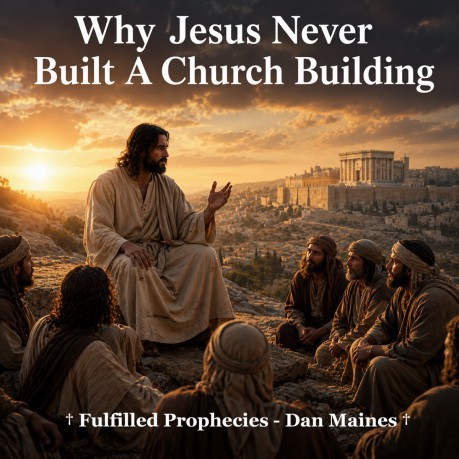
Why
Jesus Never Built A Church Building Introduction † From
the very beginning of Scripture, God's dwelling place was never meant
to remain in one physical location. Throughout history, His holy
place continued moving according to His redemptive plan. The Garden
gave way to the Tabernacle, the Tabernacle gave way to the Temple,
the Temple pointed to Christ, and Christ established His people as
God's everlasting dwelling place. The greatest surprise is that Jesus
never built a church building because He was building a living
temple. (Matthew 16:18; Ephesians 2:19-22) † Every
earthly sanctuary was temporary because it pointed to something
greater that was yet to come. (Hebrews 8:5; Hebrews 10:1) † The
New Covenant didn't produce another sacred building. It established a
living people in whom God now dwells through Christ. (2 Corinthians
6:16; Ephesians 2:22) Genesis
3:8-9
Now they heard the sound of the Lord God walking in the garden in the
cool of the day, and the man and his wife hid themselves from the
presence of the Lord God among the trees of the garden. Then the Lord
God called to the man, and said to him, "Where are you?"
† The
Garden was the first place where God dwelt with mankind. (Genesis
3:8) † Sin
interrupted that fellowship, making redemption necessary before God's
dwelling with man could be fully restored. (Genesis 3:23-24; Romans
5:12) † The
Garden was the beginning of a story that ultimately finds its
fulfillment in Christ dwelling with His people. (John 1:14;
Revelation 21:3) Exodus
25:8-9
Have them construct a sanctuary for Me, so that I may dwell among
them. According to all that I am going to show you as the pattern of
the tabernacle and the pattern of all its furniture, so you shall
construct it.
† God
instructed Israel to build the Tabernacle so He could dwell among His
covenant people. (Exodus 25:8) † The
Tabernacle was a temporary sanctuary built according to a heavenly
pattern. (Hebrews 8:5) † It
pointed beyond itself to the greater dwelling place God would
establish through Christ. (Hebrews 9:11; John 1:14) 1
Kings 8:27
"But will God indeed dwell on the earth? Behold, heaven and the
highest heaven cannot contain You, how much less this house which I
have built!
† Even
Solomon acknowledged that no earthly building could contain the
infinite God. (1 Kings 8:27) † The
Temple served God's purpose under the Old Covenant, but it was never
God's final dwelling place. (Hebrews 9:8-10) † The
Temple itself pointed forward to the greater reality that would come
through the Messiah. (John 2:19-21) John
2:19-21
Jesus answered them, "Destroy this temple, and in three days I
will raise it up." The Jews then said, "It took forty-six
years to build this temple, and yet You will raise it up in three
days?" But He was speaking about the temple of His body.
† Jesus
declared that He Himself was the true Temple. (John 2:21) † The
earthly Temple was a shadow, but Christ became the reality to which
it pointed. (Colossians 2:16-17; Hebrews 10:1) † God's
dwelling place was no longer centered in a building but in His Son.
(John 1:14; Colossians 2:9) Matthew
23:37-38
"Jerusalem, Jerusalem, who kills the prophets and stones those
who have been sent to her! How often I wanted to gather your children
together, the way a hen gathers her chicks under her wings, and you
were unwilling. Behold, your house is being left to you desolate!
† Jesus
declared that the Temple was no longer His Father's house but "your
house," showing that God had departed from the Old Covenant
sanctuary. (Matthew 23:38) † The
desolate Temple stood under judgment because Christ, the true Temple,
had come. (John 2:19-21; Matthew 24:1-2) † The
dwelling place of God was no longer centered in Jerusalem's Temple
but in His Son. (John 1:14; Colossians 2:9) Acts
7:48-50
However, the Most High does not dwell in houses made by human hands;
as the prophet says:
'Heaven is My throne,
And
the earth is the footstool of My feet;
What
kind of house will you build for Me?' says the Lord,
'Or
what place is there for My rest?
Was
it not My hand that made all these things?' † Stephen
declared that God does not dwell in temples made with human hands.
(Acts 7:48) † He
quoted Isaiah to show that this truth had always been revealed in
Scripture. (Isaiah 66:1-2) † His
message exposed the failure of those who continued trusting in the
earthly Temple after Christ had come. (Acts 7:51-53; Matthew 23:38) 1
Corinthians 3:16-17
Do you not know that you are a temple of God and that the Spirit of
God dwells in you? If anyone destroys the temple of God, God will
destroy that person; for the temple of God is holy, and that is what
you are.
† Paul
plainly identifies believers as God's Temple. (1 Corinthians 3:16) † Under
the New Covenant, God's Spirit dwells in His people rather than in a
building made with hands. (Ephesians 2:21-22) † The
holy place had moved from stone walls to living believers united in
Christ. (2 Corinthians 6:16; 1 Peter 2:5) Ephesians
2:19-22
So then you are no longer strangers and foreigners, but you are
fellow citizens with the saints, and are of God's household, having
been built on the foundation of the apostles and prophets, Christ
Jesus Himself being the cornerstone, in whom the whole building,
being fitted together, is growing into a holy temple in the Lord, in
whom you also are being built together into a dwelling of God in the
Spirit.
† Paul
identifies believers as God's holy Temple under the New Covenant.
(Ephesians 2:21-22) † Christ
is the cornerstone, and His people are the living stones of God's
spiritual house. (1 Peter 2:5-6) † God's
dwelling place has moved from buildings made with hands to the people
redeemed by Christ. (2 Corinthians 6:16; Ephesians 2:22) John
4:21-24
Jesus said to her, "Believe Me, woman, that a time is coming
when you will worship the Father neither on this mountain nor in
Jerusalem. You Samaritans worship what you do not know; we worship
what we do know, because salvation is from the Jews. But a time is
coming, and even now has arrived, when the true worshipers will
worship the Father in spirit and truth; for such people the Father
seeks to be His worshipers. God is spirit, and those who worship Him
must worship in spirit and truth."
† Jesus
announced the end of worship centered on sacred locations. (John
4:21) † True
worship would no longer depend upon Jerusalem or Mount Gerizim but
upon Christ. (John 4:23-24) † This
prepared the way for God's dwelling among His people instead of
within an earthly sanctuary. (Ephesians 2:22; Revelation 21:22) Revelation
21:22
I saw no temple in it, for the Lord God the Almighty and the Lamb are
its temple.
† John's
vision reaches the final destination of God's dwelling place.
(Revelation 21:22) † There
is no physical Temple because God and the Lamb are now the Temple of
His people. (John 2:19-21) † The
movement that began in the Garden reaches its fulfillment in Christ
and His redeemed people. (Revelation 21:3; Ephesians 2:21-22) † The
progression is complete: Garden, Tabernacle, Temple, Christ, and
finally His Body, where God dwells forever. (Genesis 3:8; Exodus
25:8; John 2:21; Ephesians 2:22; Revelation 21:22)
Historical
References † The
Garden, the Tabernacle, and the Temple each served as temporary
dwelling places that anticipated the greater reality fulfilled in
Christ. (Genesis 3:8; Exodus 25:8; John 2:21) † Stephen
proclaimed that God does not dwell in temples made with hands shortly
before the destruction of Jerusalem's Temple in AD 70. (Acts 7:48-50;
Luke 21:5-6) † The
New Testament consistently identifies Christ and His people as God's
true dwelling place under the New Covenant. (Ephesians 2:19-22; 1
Peter 2:5) How
It Applies To Us Today † We
don't travel to a holy building to find God because He now dwells
with His people through Christ. (Ephesians 2:22; 2 Corinthians 6:16) † Every
believer is part of the living Temple God is building, founded upon
Jesus Christ Himself. (1 Peter 2:5; Ephesians 2:20-22) † Our
identity isn't found in a physical sanctuary but in being God's
dwelling place through the finished work of Christ. (John 4:21-24;
Revelation 21:22) Q
& A Appendix Q:
Why
didn't Jesus build a church building? A:
Jesus
came to build His church, not a physical sanctuary. His people are
the living Temple in whom God now dwells. (Matthew 16:18; Ephesians
2:21-22) Q:
Where
does God dwell today? A:
God
dwells in Christ and in His redeemed people through the Holy Spirit,
not in temples made with human hands. (Acts 7:48-50; 2 Corinthians
6:16) Q:
What
was the purpose of the Tabernacle and the Temple? A:
They
were temporary shadows pointing to Christ, who became the true Temple
and established His people as God's dwelling place. (Hebrews 8:5;
John 2:19-21) Q:
Why
is there no Temple in the New Jerusalem? A:
Because
the Lord God Almighty and the Lamb are its Temple, fulfilling
everything the earthly Temple foreshadowed. (Revelation 21:22) Q:
Does
this mean church buildings are sinful? A:
No.
A building can be a useful place for believers to gather, but
Scripture never calls it God's Temple. Under the New Covenant, God's
dwelling place is His redeemed people in Christ. (Acts 7:48-50; 1
Corinthians 3:16; Ephesians 2:21-22) † This
is the fulfilled perspective we proclaim at Fulfilled Prophecies † © Fulfilled
Prophecies - Dan Maines. Source
Index † Genesis
3:8-9, Exodus 25:8-9, 1 Kings 8:27, John 2:19-21, Matthew 23:37-38,
Acts 7:48-50, 1 Corinthians 3:16-17, Ephesians 2:19-22, John 4:21-24,
Revelation 21:22 † Moses,
Solomon, Isaiah the Prophet, Matthew, Luke, John the Apostle,
Stephen, Paul the Apostle
By Dan Maines
Links