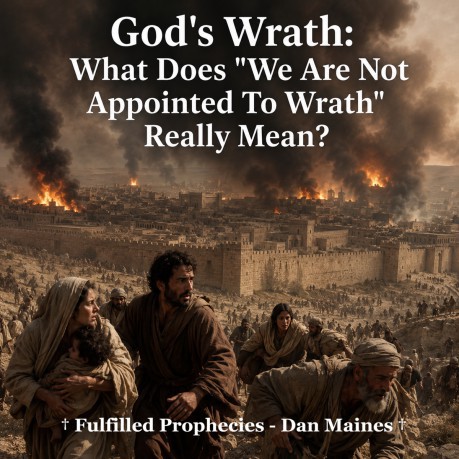
God's Wrath: What Does "We
Are Not Appointed To Wrath" Really Mean? Introduction † One of the most common arguments used to
defend a pre-tribulation rapture is the statement, "We are not
appointed to God's wrath." The conclusion is then made that
believers must be removed from the earth before a future seven-year
tribulation because that period is supposedly God's wrath. † But is that what the Bible actually teaches?
Or is that conclusion being read into the text? Scripture always
defines Scripture. When we examine every passage in its covenant and
historical context, we discover that God's wrath was directed against
the Old Covenant nation that rejected its Messiah, exactly as Jesus
and His apostles repeatedly warned would happen within their
generation. (Matthew 23:35-38; Matthew 24:34; Luke 21:20-22) † Let's allow the Bible to explain what God's
wrath was, who it was directed toward, and what believers were
actually delivered from. Romans 5:9 Much more then, having now been justified by His blood, we shall
be saved from the wrath of God through Him. † Paul says believers would be saved from God's
wrath through Christ. He does not mention escaping the earth, but
escaping the judgment that was coming upon unbelieving Israel. (Luke
21:22-23; 1 Thessalonians 2:14-16) † The same generation that rejected Christ was
warned repeatedly that wrath was approaching. The gospel provided
salvation from that coming covenant judgment. (Matthew 3:7; Luke 3:7) † Justification by Christ placed believers into
the New Covenant where there is no condemnation. (Romans 8:1; John
5:24) 1 Thessalonians 1:10 and to wait for His Son from heaven, whom He raised from the dead,
that is, Jesus who rescues us from the wrath to come. † Paul wrote to first-century believers who
were personally waiting for Christ's promised coming. The audience
matters. He was writing to them, not to people living thousands of
years later. (1 Thessalonians 4:15-17; Hebrews 10:37) † The wrath to come was already approaching
during their lifetime, just as John the Baptist had warned decades
earlier. (Matthew 3:7; Luke 3:7) † Jesus delivered His faithful followers by
warning them to flee Jerusalem when they saw the signs He gave. They
escaped exactly as He promised. (Luke 21:20-22; Matthew 24:15-22) 1 Thessalonians 5:9 For God has not destined us for wrath, but for obtaining salvation
through our Lord Jesus Christ, † This verse never says believers would
disappear before tribulation. It simply says they were not appointed
to receive God's wrath. † Throughout Scripture God's people have often
lived through persecution while being preserved from God's judgments.
Noah lived through the flood. Israel remained in Goshen during the
plagues. The early Christians fled Jerusalem before its destruction.
(Genesis 7:23; Exodus 8:22; Luke 21:20-22) † God's wrath and man's persecution are not the
same thing. Christians have always experienced persecution, but they
are never the objects of God's condemnation. (John 16:33; Romans 8:1) 1 Thessalonians 2:14-16 For you, brothers and sisters, became imitators of the churches of
God in Christ Jesus that are in Judea, for you also endured the same
sufferings at the hands of your own countrymen, even as they did from
the Jews, who both killed the Lord Jesus and the prophets, and drove
us out. They are not pleasing to God, but hostile to all people,
hindering us from speaking to the Gentiles so that they may be saved;
with the result that they always reach the limit of their sins. But
wrath has come upon them fully. † Paul removes all doubt about who God's wrath
was directed toward. He says the wrath came upon them, referring to
those Jews who rejected Christ and persecuted both the Lord and His
apostles. (Matthew 23:29-36; Luke 21:20-24) † This isn't describing a worldwide judgment on
all mankind. It is describing covenant judgment against the nation
that rejected its Messiah. (Matthew 21:43; Romans 9:30-33) † This passage perfectly agrees with Jesus'
warnings that judgment would come upon that generation, culminating
in the destruction of Jerusalem in AD 70. (Matthew 23:36-38; Matthew
24:34) Luke 21:22-23 because these are days of punishment, so that all things which
have been written will be fulfilled. Woe to those women who are
pregnant, and to those who are nursing babies in those days; for
there will be great distress upon the land, and wrath to this people; † Jesus identified exactly where God's wrath
would fall, upon this people, referring to first-century Israel that
had rejected Him. (Matthew 23:35-36) † He called these the days of vengeance when
all things written would be fulfilled. That leaves no room for
another future fulfillment of the same covenant judgments. (Daniel
9:24; Luke 24:44) † The wrath Jesus described culminated in the
destruction of Jerusalem in AD 70, exactly within the generation He
addressed. (Matthew 24:34; Luke 17:25) Matthew 23:35-36 so that upon you will fall the guilt of all the righteous blood
shed on earth, from the blood of righteous Abel to the blood of
Zechariah, the son of Berechiah, whom you murdered between the temple
and the altar. Truly I say to you, all these things will come upon
this generation. † Jesus identified the very generation that
would receive God's covenant wrath. He didn't place this judgment
thousands of years into the future. (Matthew 24:34; Luke 11:49-51) † The phrase upon you leaves no doubt that His
warning was directed to the religious leaders standing before Him.
(Matthew 23:13-33; Luke 21:22-23) † This passage explains exactly why Paul could
later speak of wrath coming upon them. Both Jesus and Paul were
speaking of the same covenant judgment. (1 Thessalonians 2:14-16;
Romans 5:9) Matthew 3:7 But when he saw many of the Pharisees and Sadducees coming for
baptism, he said to them, You offspring of vipers, who warned you to
flee from the wrath to come? † John the Baptist announced the coming wrath
decades before Jerusalem fell. † His warning was directed at the religious
leaders of Israel, not at future generations thousands of years
later. (Matthew 23:29-36) † Jesus continued that same warning throughout
His ministry until its complete fulfillment. (Matthew 23:37-38; Luke
19:41-44) Matthew 24:21-22 For then there will be a great tribulation, such as has not
occurred since the beginning of the world until now, nor ever will
again. And if those days had not been cut short, no life would have
been saved; but for the sake of the elect those days will be cut
short. † The great tribulation was part of the same
judgment Jesus had been describing against Jerusalem. It was not
separated from His discussion by thousands of years. (Matthew
24:15-20; Luke 21:20-24) † Jesus instructed His disciples to flee when
they saw Jerusalem surrounded by armies, proving this tribulation
belonged to the first century. (Luke 21:20-22; Matthew 24:16) † God's wrath and the great tribulation belong
to the same historical period that ended with the fall of Jerusalem
in AD 70. (Luke 21:22-24; 1 Thessalonians 2:16) Historical References † Josephus, an eyewitness to the Jewish War,
describes the famine, civil war, false prophets, desecration of the
temple, and complete destruction of Jerusalem in AD 70. His account
closely parallels Jesus' warnings in Matthew 24, Mark 13, and Luke
21, providing historical confirmation that those prophecies were
fulfilled exactly as spoken. † Josephus records that over one million Jews
perished during the siege and that the temple was completely
destroyed by the Romans, bringing the Old Covenant sacrificial system
to its permanent end, just as Jesus foretold. (Matthew 24:1-2; Luke
21:5-6) † Eusebius records that the Christians in
Jerusalem remembered Jesus' command to flee when they saw Jerusalem
surrounded by armies. They departed to Pella before the siege began,
demonstrating that Christ preserved His followers while God's
covenant wrath fell upon apostate Jerusalem. (Luke 21:20-22) † Tacitus, the Roman historian, also records
the devastation of the Jewish War and the destruction of Jerusalem,
providing an independent non-Christian witness that these
catastrophic events occurred in the first century. † These historical writers do not establish
doctrine, Scripture alone does that. They simply confirm that the
events Jesus and His apostles predicted actually happened in history
exactly when and where they said they would. How It Applies To Us Today † We don't live in fear of God's wrath because
we are in Christ. (Romans 8:1; John 5:24) † We should never build doctrine from isolated
verses while ignoring their audience and historical setting. (2
Timothy 2:15; Acts 17:11) † Our confidence isn't in escaping a future
tribulation but in the finished work of Christ, who fulfilled every
promise He made concerning His coming in judgment against the Old
Covenant system. (John 19:30; Matthew 24:34) Q & A Appendix Q: Does "we are not appointed to wrath"
teach a pre-tribulation rapture? A: No. The verse simply states that believers
were not appointed to receive God's wrath. It never says they would
be removed from the earth before tribulation. God's people are
repeatedly preserved through judgment, not necessarily removed before
it. (1 Thessalonians 5:9; Luke 21:20-22; Romans 8:1) Q: What was the wrath Paul referred to? A: The coming covenant judgment against
unbelieving Israel that culminated in the destruction of Jerusalem in
AD 70, exactly as Jesus foretold. (Luke 21:22-23; Matthew 23:35-38; 1
Thessalonians 2:14-16) Q: Are Christians promised a life free from
persecution? A: No. Jesus promised persecution, but never
condemnation. Believers may suffer at the hands of men, but they are
never objects of God's wrath. (John 16:33; Romans 8:1; 2 Timothy
3:12) Q: Does God's wrath always refer to the end of
the world? A: No. The Bible never teaches the end of the
world. Throughout Scripture God's wrath refers to God's historical
judgments upon nations such as Egypt, Babylon, Edom, Israel, and
Judah. The wrath Jesus and the apostles warned about was the covenant
judgment that came upon first-century Jerusalem, exactly as they
foretold. (Isaiah 13:9-13; Jeremiah 25:15-18; Luke 21:22-23; 1
Thessalonians 2:14-16) Q: What does Paul mean when he says, "We are
not appointed to God's wrath"? A: Paul is assuring believers that they were not
appointed to receive the covenant wrath God was about to pour out
upon those who rejected Christ. Throughout his letters, Paul
consistently points to a judgment that was near for his first-century
audience. That wrath came upon unbelieving Israel, just as Jesus had
foretold. Those who were in Christ were delivered from that judgment.
(1 Thessalonians 5:9; 1 Thessalonians 2:14-16; Luke 21:22-23; Matthew
23:35-36) Q: If believers are not appointed to God's wrath,
then who was God's wrath directed toward? A: Jesus and the apostles repeatedly identified
the object of God's wrath as the generation that rejected the
Messiah. Jesus said, "wrath unto this people," and Paul
said, "the wrath is come upon them to the uttermost." Both
were speaking of the covenant judgment that culminated in the
destruction of Jerusalem in AD 70. (Luke 21:22-23; Matthew 23:35-38;
1 Thessalonians 2:14-16) This is the fulfilled perspective we proclaim at Fulfilled
Prophecies. † © Fulfilled Prophecies - Dan Maines. Source Index † Romans 5:9; 1 Thessalonians 1:10; 1
Thessalonians 5:9; 1 Thessalonians 2:14-16; Luke 21:22-23; Matthew
3:7; Matthew 23:35-36; Matthew 24:21-22 † Josephus, Wars of the Jews, Books 5-6;
Eusebius, Ecclesiastical History, Book 3, Chapter 5; Tacitus,
Histories, Book 5
By Dan Maines
Links