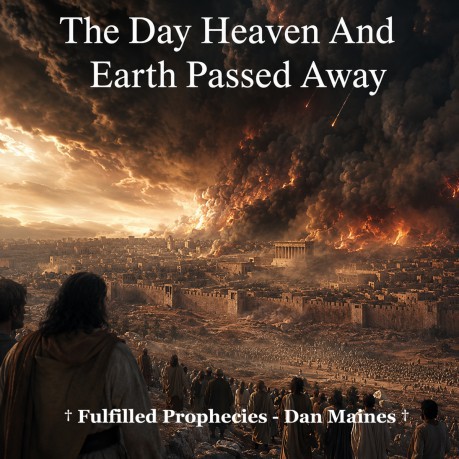
The Day Heaven And Earth
Passed Away Introduction † One of the greatest assumptions in modern
Christianity is that the phrase "heaven and earth" always
refers to the physical universe. Yet the Bible repeatedly uses this
language to describe covenantal orders, nations, and God's
relationship with His people. † The Old Covenant had its own "heaven and
earth," established at Sinai. When that covenant reached its end
in AD 70, Scripture describes it as the passing away of heaven and
earth, not the destruction of the planet. † This becomes one of the strongest proofs that
Matthew 24 and 2 Peter 3 are speaking about the end of the Old
Covenant world, not the end of the physical universe. Isaiah 51:15-16 For I am the Lord your God, who stirs up the sea so that its waves
roar (the Lord of armies is His name). And I have put My words in
your mouth and have covered you with the shadow of My hand, to
establish the heavens, to found the earth, and to say to Zion, 'You
are My people.' † Isaiah says God planted the heavens and laid
the foundations of the earth when He established Israel as His
covenant people. This is covenant language, not the creation of the
universe. (Isaiah 51:15-16) † The context is God's redemption of Israel,
showing that "heavens" and "earth" can describe
the covenant order He established with His people. (Deuteronomy 32:1;
Isaiah 1:2) † If God could plant covenant heavens, He could
also remove them when that covenant reached its fulfillment. (Hebrews
8:13) Haggai 2:6-7 For this is what the Lord of armies says: 'Once more in a little
while, I am going to shake the heavens and the earth, the sea also
and the dry land. I will shake all the nations; and they will come
with the wealth of all nations, and I will fill this house with
glory,' says the Lord of armies. † Haggai foretold one final shaking of heaven
and earth before God filled His house with greater glory. (Haggai
2:6-7) † Hebrews 12 quotes this prophecy and explains
that the shaking removed the Old Covenant order so that God's
unshakable kingdom would remain. (Hebrews 12:26-28) † The prophecy was never about the destruction
of the universe. It was about God's covenant transition from the Old
Covenant to the New Covenant. (Hebrews 8:13) Isaiah 65:17-18 For behold, I create new heavens and a new earth; And the former
things will not be remembered or come to mind. But be glad and
rejoice forever in what I create; For behold, I create Jerusalem for
rejoicing And her people for gladness. † Isaiah connects the new heavens and new earth
directly with a new Jerusalem, showing that the prophecy concerns
God's covenant people. (Isaiah 65:17-18) † The emphasis is on God's new covenant
relationship, not on replacing the physical universe with another
planet. (Galatians 4:26; Hebrews 12:22-24) † The passing away of the former heavens and
earth made way for the everlasting New Covenant kingdom established
through Christ. (2 Corinthians 5:17) Matthew 24:34-35 Truly I say to you, this generation will not pass away until all
these things take place. Heaven and earth will pass away, but My
words will not pass away. † Jesus placed the passing away of heaven and
earth within the lifetime of His own generation. (Matthew 24:34-35) † The context is the destruction of the temple,
the end of the age, and the judgment upon Jerusalem, not the end of
the physical universe. (Matthew 24:1-3) † Jesus contrasted the temporary Old Covenant
order with the eternal authority of His words that established the
New Covenant. (Hebrews 12:26-28) Luke 16:16-17 The Law and the Prophets were proclaimed until John came; since
that time the gospel of the kingdom of God has been preached, and
everyone is forcing his way into it. But it is easier for heaven and
earth to pass away than for one stroke of a letter of the Law to
fail. † Jesus connected the passing of heaven and
earth with the fulfillment of the Law, showing they belong to the
same covenant framework. (Luke 16:16-17) † The Law would remain fully authoritative
until every purpose of the Old Covenant was accomplished. (Matthew
5:17-18) † Once the covenant reached its fulfillment,
the New Covenant stood as God's everlasting kingdom through Christ.
(Hebrews 8:13) Hebrews 12:26-28 And His voice shook the earth then, but now He has promised,
saying, "Yet once more I will shake not only the earth, but also
the heaven." This expression, "Yet once more," denotes
the removing of those things which can be shaken, as of created
things, so that those things which cannot be shaken may remain.
Therefore, since we receive a kingdom which cannot be shaken, let's
show gratitude, by which we may offer to God an acceptable service
with reverence and awe; † The writer explains that both heaven and
earth would be shaken so that the unshakable kingdom would remain.
(Hebrews 12:26-28) † He was quoting Haggai to describe the removal
of the Old Covenant system that was still standing in his day.
(Haggai 2:6-7) † Believers were already receiving the kingdom
that could never be shaken, proving the transition from the Old
Covenant to the New Covenant was underway. (Hebrews 12:22-28) 2 Peter 3:10-13 But the day of the Lord will come like a thief, in which the
heavens will pass away with a roar and the elements will be destroyed
with intense heat, and the earth and its works will be discovered. Since all these things are to be destroyed in this way, what sort
of people ought you to be in holy conduct and godliness, looking for
and hastening the coming of the day of God, because of which the
heavens will be destroyed by burning, and the elements will melt with
intense heat! But according to His promise we are looking for new
heavens and a new earth, in which righteousness dwells. † Peter was not introducing a new prophecy. He
specifically said he was looking for what God had already promised
through Isaiah. (Isaiah 65:17) † The language of fire, melting, and dissolving
follows the same prophetic judgment language used throughout the Old
Testament against nations and covenant systems. (Isaiah 34:4; Ezekiel
32:7-8) † Peter expected the arrival of the promised
new heavens and new earth, the New Covenant order where righteousness
permanently dwells. (Hebrews 12:22-24; Revelation 21:1-3) Isaiah 34:4 And all the heavenly lights will wear away, And the sky will be
rolled up like a scroll; All its lights will also wither away As a
leaf withers from the vine, Or as one withers from the fig tree. † Isaiah used the same language of dissolving
heavens and a rolled-up sky to describe God's judgment against Edom,
not the destruction of the physical universe. (Isaiah 34:1-4) † Peter follows this well-known prophetic
language to describe covenant judgment, just as the prophets had done
for centuries. (2 Peter 3:10-13) † Understanding Isaiah's imagery prevents us
from reading a literal end of the universe into language that
consistently describes divine judgment. (Isaiah 13:10; Ezekiel
32:7-8) Revelation 21:1-3 Then I saw a new heaven and a new earth; for the first heaven and
the first earth passed away, and there is no longer any sea. And I
saw the holy city, new Jerusalem, coming down out of heaven from God,
prepared as a bride adorned for her husband. And I heard a loud voice
from the throne, saying, Behold, the tabernacle of God is among the
people, and He will dwell among them, and they shall be His people,
and God Himself will be among them, † John did not introduce a new prophecy, he was
showing the fulfillment of Isaiah's promise of new heavens, a new
earth, and a new Jerusalem. (Isaiah 65:17-19) † The focus is God's dwelling with His redeemed
people, not the creation of another physical universe. (Hebrews
12:22-24) † The passing away of the first heaven and
earth made way for God's everlasting New Covenant kingdom and His
dwelling with His people. (2 Corinthians 5:17; Revelation 21:1-3) Historical References † Josephus described the destruction of
Jerusalem and the temple in AD 70 as the complete end of the Jewish
nation under the Old Covenant economy. (The Wars of the Jews, Book 6) † Eusebius recorded that the believers obeyed
Christ's warning and fled Jerusalem before its destruction,
preserving the church while judgment fell upon the city.
(Ecclesiastical History, Book 3) † Irenaeus affirmed that the apostolic writings
belonged to the generation that witnessed the fulfillment of Christ's
warnings concerning Jerusalem. (Against Heresies, Book 5) † Tacitus recorded the devastation of Jerusalem
and the destruction of the temple by the Roman armies under Titus.
(Histories, Book 5) How It Applies To Us Today † We don't live waiting for heaven and earth to
pass away because that covenant transition has already occurred. † We live in the unshakable kingdom Christ
established through His finished work. † We are citizens of the heavenly Jerusalem
now, not people waiting for another covenant to replace this one.
(Hebrews 12:22-24) † Our confidence rests in Christ's fulfilled
promises, because not one of His words failed. (Matthew 24:35) Q & A Appendix Q: Did Jesus predict the destruction of the
physical universe in Matthew 24? A: No. The context is the destruction of the
temple, the end of the age, and events that Jesus said would occur
within that generation. (Matthew 24:1-3, 34-35) Q: What are the new heavens and new earth? A: They are God's New Covenant order established
through Christ, fulfilling Isaiah's promise of a new Jerusalem and an
everlasting covenant. (Isaiah 65:17-18; Hebrews 12:22-28; Revelation
21:1-3) Q: What is the biggest evidence that "heaven
and earth" is covenant language? A: Isaiah says God planted the heavens and laid
the foundations of the earth when He established Zion as His covenant
people. That shows the phrase can describe a covenant order rather
than the physical universe. (Isaiah 51:15-16) Q: If heaven and earth is the physical universe,
why did Isaiah say God planted the heavens and laid the foundations
of the earth when He established Zion? A: Because Isaiah was describing the
establishment of Israel's covenant world. If covenant heavens could
be planted, covenant heavens could also pass away when the Old
Covenant reached its fulfillment. (Isaiah 51:15-16; Matthew 24:35;
Hebrews 12:26-28) Q: Why did Peter use language about the heavens
dissolving and the elements melting? A: Peter was using the same prophetic judgment
language found throughout the Old Testament. The prophets used this
imagery to describe God's judgment upon nations and covenant systems,
not the destruction of the physical universe. (Isaiah 13:10; Isaiah
34:4; Ezekiel 32:7-8; 2 Peter 3:10-13) Q: How does Hebrews 12 help explain Matthew 24
and 2 Peter 3? A: Hebrews quotes Haggai's prophecy about one
final shaking of heaven and earth and explains that it removed the
things that could be shaken so God's unshakable kingdom would remain.
This identifies the passing of the Old Covenant and the establishment
of the New Covenant. (Haggai 2:6-7; Hebrews 12:26-28) Q: If the first heaven and earth passed away,
what replaced it? A: God established the promised new heavens and
new earth, the New Covenant order where He dwells with His redeemed
people in the New Jerusalem. (Isaiah 65:17-18; Hebrews 12:22-24;
Revelation 21:1-3) Q: Why is this important? A: Because it explains that Isaiah 51, Isaiah 65,
Matthew 24, Hebrews 12, 2 Peter 3, and Revelation 21 all speak
consistently about the passing of the Old Covenant and the
establishment of Christ's everlasting kingdom. (Isaiah 51:15-16;
Isaiah 65:17-18; Matthew 24:35; Hebrews 12:26-28; 2 Peter 3:13;
Revelation 21:1-3) † This is the fulfilled perspective we proclaim at
Fulfilled Prophecies † © Fulfilled Prophecies - Dan Maines. Source Index † Isaiah 13; Isaiah 34; Isaiah 51; Isaiah 65;
Matthew 5; Matthew 24; Luke 16; Hebrews 8; Hebrews 12; Deuteronomy
32; Haggai 2; Ezekiel 32; Galatians 4; 2 Corinthians 5; 2 Peter 3;
Revelation 21 † Josephus, The Wars of the Jews, Book 6;
Tacitus, Histories, Book 5; Eusebius, Ecclesiastical History, Book 3;
Irenaeus, Against Heresies, Book 5
By Dan Maines
Links