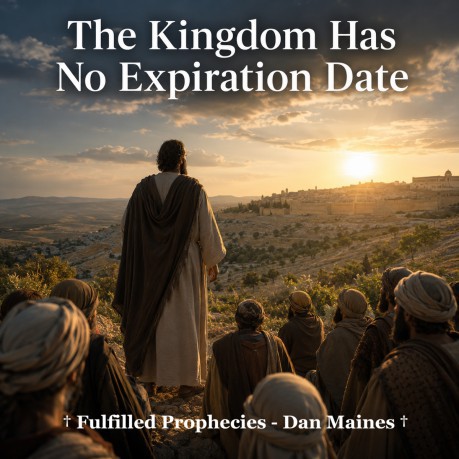
The Kingdom Has No Expiration
Date Introduction Isaiah 9:6-7 Daniel 2:44 Luke 1:32-33 Matthew 16:28 Hebrews 12:28 Revelation 11:15 Historical References How It Applies To Us Today Q & A Appendix Q: If the coming of Christ was fulfilled in the
first century, what continues today? Q: Are we still waiting for the Kingdom to
arrive? Q: Can political upheaval or the collapse of
nations threaten Christ's Kingdom? Q: Does fulfilled eschatology leave Christians
without anything to look forward to? † This is the fulfilled perspective we proclaim at
Fulfilled Prophecies † Source Index
By Dan Maines
† Empires
rise and fall, governments change, rulers come and go, and
generations pass away, but the Kingdom established by Jesus Christ
isn't temporary.
† Scripture presents
Christ's Kingdom as everlasting, increasing, unshakable, and
incapable of being destroyed.
† Jesus didn't
establish a Kingdom that would disappear after the events of the
first century. He established the Kingdom that those events fully
revealed and confirmed.
† The judgment that
brought the Old Covenant age to its conclusion didn't end Christ's
Kingdom, it demonstrated that His Kingdom was the one Kingdom that
couldn't be removed.
† Fulfilled prophecy
doesn't leave us with less hope. It leaves us living in the
everlasting Kingdom that prophecy promised.
For a Child will be born to us,
a Son will be given to us; And the government will rest on His
shoulders; And His name will be called Wonderful Counselor, Mighty
God, Eternal Father, Prince of Peace. There will be no end to the
increase of His government or of peace On the throne of David and
over his kingdom, To establish it and to uphold it with justice and
righteousness From then on and forevermore. The zeal of the Lord of
armies will accomplish this.
† Isaiah didn't
describe a Kingdom with an expiration date. He said that the increase
of Christ's government and peace would have no end. (Luke 1:32-33)
†
The Messiah's reign was promised to continue forever. His Kingdom
wasn't designed to flourish briefly and then disappear. (Psalm
145:13)
† This means fulfillment isn't the
end of Christ's reign. Fulfillment established what God promised, an
everlasting government of righteousness and peace. (Revelation 11:15)
And in the days of those kings
the God of heaven will set up a kingdom which will never be
destroyed, and that kingdom will not be left for another people; it
will crush and put an end to all these kingdoms, but it will itself
endure forever.
† Daniel couldn't have said
it more clearly. God's Kingdom would be established during the days
of those kingdoms, and once established, it would never be destroyed.
(Matthew 3:2)
† Human kingdoms have
expiration dates. Babylon fell, Medo-Persia fell, Greece fell, and
Rome's ancient imperial power eventually fell, but the Kingdom of
Christ remains. (John 18:36)
† The Kingdom
wasn't waiting thousands of years to begin. Jesus announced its
nearness, and the first-century believers were already being brought
into it. (Colossians 1:13)
† AD 70 wasn't the
destruction of Christ's Kingdom. It was the decisive removal of the
Old Covenant order that had reached its appointed end, while Christ's
Kingdom continued. (Hebrews 8:13)
He will be great and will be
called the Son of the Most High; and the Lord God will give Him the
throne of His father David; and He will reign over the house of Jacob
forever, and His kingdom will have no end.
†
Before Jesus was born, Gabriel announced that His Kingdom would have
no end. There isn't a second expiration date hidden somewhere in the
promise. (Isaiah 9:7)
† Jesus received the
promised throne and reigns as the victorious King. His authority
isn't temporary, conditional, or waiting for another earthly
political system to make Him King. (Acts 2:30-36)
†
Christ's fulfilled coming in judgment didn't terminate His reign. His
reign continues because His Kingdom is everlasting. (1 Corinthians
15:25)
† We aren't waiting for Jesus to
become King. We belong to the Kingdom of the King who already reigns.
(Colossians 1:13)
"Truly I say to you,
there are some of those who are standing here who will not taste
death until they see the Son of Man coming in His kingdom."
†
Jesus placed the coming manifestation of His Kingdom within the
lifetime of people standing before Him. His words belong to their
generation, not ours. (Matthew 24:34)
†
Fulfilled eschatology takes this time statement seriously. Some of
those listening would still be alive when the promised coming in His
Kingdom occurred. (Matthew 10:23)
† But
fulfillment doesn't mean termination. The coming was fulfilled, while
the Kingdom manifested through that fulfillment continues forever.
(Daniel 7:13-14)
Therefore, since we receive a
kingdom which cannot be shaken, let's show gratitude, by which we may
offer to God an acceptable service with reverence and awe;
†
The writer didn't tell believers that they were waiting thousands of
years to receive the Kingdom. He said they were receiving a Kingdom
that couldn't be shaken. (Hebrews 12:22-24)
†
The surrounding context describes the removal of things that could be
shaken so that the things that couldn't be shaken would remain.
(Hebrews 12:26-27)
† The Old Covenant world
could be shaken and removed. Christ's Kingdom couldn't be shaken or
removed. That's why the destruction of Jerusalem didn't destroy the
Kingdom. (Hebrews 8:13)
† We live on the
other side of that covenantal shaking. What remains isn't an
unfinished temporary arrangement, but the unshakable Kingdom of
Christ. (Hebrews 13:14)
Then the seventh angel
sounded; and there were loud voices in heaven, saying, "The
kingdom of the world has become the kingdom of our Lord and of His
Christ; and He will reign forever and ever."
†
Revelation doesn't end with Christ losing His Kingdom. It announces
His everlasting reign. (Revelation 22:3-5)
†
The first-century judgment revealed the victory and authority of the
Lamb, but His reign continues beyond that judgment. (Revelation
19:6)
† Fulfillment means the promised
victory occurred. It doesn't mean the results of that victory
expired. (Daniel 7:14)
† The Kingdom
continues because the King continues, and His dominion is
everlasting. (Ephesians 1:20-23)
†
Josephus recorded the catastrophic fall of Jerusalem and the temple
in AD 70, showing the historical destruction of the Old Covenant
center of worship while Christianity continued beyond that judgment.
(Josephus, Wars of the Jews, Books 5-7)
†
Tacitus recorded the Roman campaign against Jerusalem and the
destruction associated with the Jewish war, providing an independent
Roman witness to the historical setting of that generation's
judgment. (Tacitus, Histories, Book 5)
†
Eusebius later recorded the Christian understanding that believers
escaped Jerusalem before its destruction and described the calamities
that came upon the city. (Eusebius, Ecclesiastical History, Book 3,
Chapters 5-7)
† History records Jerusalem's
fall, but history doesn't record the expiration of Christ's Kingdom.
Christianity continued spreading among nations long after the temple
was gone.
†
We don't live waiting for Christ to establish His Kingdom. We live as
citizens of the Kingdom He established and promised would never be
destroyed. (Colossians 1:13)
† Governments
can change, nations can struggle, economies can rise and fall, but
none of those things threatens the throne of Jesus Christ. (Psalm
2:6-8)
† Our confidence isn't based on which
political party controls a government or which nation appears
strongest. Our confidence rests in a King whose Kingdom can't be
shaken. (Hebrews 12:28)
† We don't need to
live frightened that world events will somehow overthrow God's plan.
Christ has received all authority, and His Kingdom remains. (Matthew
28:18)
† We can live with joy because we're
not citizens of a Kingdom approaching destruction. We're citizens of
the Kingdom that survived the shaking and will never end.
(Philippians 3:20)
† Every generation of
believers can proclaim the same good news. Jesus Christ reigns, His
Kingdom stands, and there will never be a generation in which His
Kingdom expires. (Ephesians 3:21)
Q: Did
Christ's Kingdom end when prophecy was fulfilled in AD 70?
A:
No. Prophecy's fulfillment confirmed the Kingdom rather than ending
it. Daniel said the Kingdom would stand forever, and Hebrews calls it
a Kingdom that can't be shaken. (Daniel 2:44; Hebrews 12:28)
A: The
results of Christ's completed redemptive work continue. His reign,
His Kingdom, access to God, and life in the New Covenant aren't
temporary blessings. (Luke 1:32-33; Hebrews 12:22-24)
A: No. First-century believers had
already been transferred into Christ's Kingdom, and Hebrews said they
were receiving the unshakable Kingdom. (Colossians 1:13; Hebrews
12:28)
A: No. Human
governments are temporary, but Christ's Kingdom can never be
destroyed. Our security rests in His everlasting reign, not in
earthly governments. (Daniel 2:44; Isaiah 9:7)
A: No. It
gives us something wonderful to live in right now. We live in
Christ's Kingdom, enjoy New Covenant access to God, and participate
in a Kingdom whose increase and peace have no end. (Isaiah 9:7;
Hebrews 12:22-28)
© Fulfilled Prophecies - Dan
Maines.
† Isaiah
9:6-7; Daniel 2:44; Luke 1:32-33; Matthew 16:28; Hebrews 12:28;
Revelation 11:15
† Josephus, Wars of the
Jews, Books 5-7; Tacitus, Histories, Book 5; Eusebius, Ecclesiastical
History, Book 3, Chapters 5-7
Links