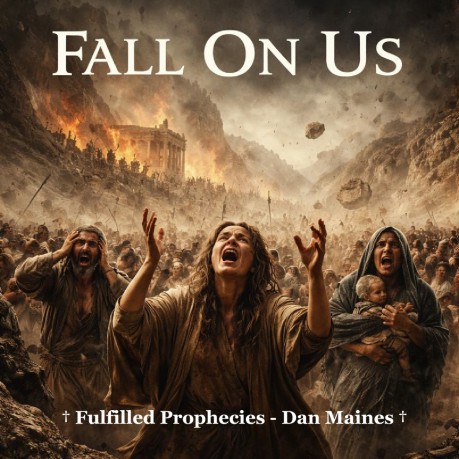
Fall On Us Introduction † Jesus spoke these words on the way to the
cross, not as a plea for sympathy, but as a final warning to
Jerusalem about what was coming within that generation. Luke 23:28 † Jesus redirects their grief away from His
suffering and toward their own coming judgment (Luke 19:41-44). Luke 23:29 † This reverses Israel's covenant blessing
theology, showing a time when life itself would be viewed as a curse
(Deuteronomy 28:18). Luke 23:30 † This is Old Testament judgment language, not
literal mountains moving (Hosea 10:8). Luke 23:31 † The green tree represents Jesus and the
covenant still standing, the dry tree represents apostate Israel
under judgment. † Jesus consistently tied judgment to that
generation, not a distant future (Matthew 24:34). Historical References † Josephus records famine, terror, and mass
death in Jerusalem exactly matching Jesus' warnings (Wars of the Jews
5-6). How It Applies To Us Today † Christ's words remind us that covenant
faithfulness matters, and rejection of truth has consequences. Q & A Appendix Q What did Jesus mean by fall on us? Q Was this about the end of the world? Q How do we know this was fulfilled? Q Why did Jesus use Old Testament judgment
language while being crucified? Q Why didn't this warning apply to Christians? Q Why do futurists apply this to the end of the
world? † This is the fulfilled perspective we proclaim at
Fulfilled Prophecies † Source Index † Luke 23:28-31; Hosea 10:8; Matthew 23:36-38;
Matthew 24:34; Revelation 6:15-17
By Dan Maines
†
This moment shows His full awareness that covenant judgment was
imminent, even as He was being led to death.
†
The phrase fall on us is not poetic despair, it is prophetic language
rooted in Israel's own Scriptures and fulfilled in AD 70.
But
Jesus turned to them and said, "Daughters of Jerusalem, stop
weeping for Me, but weep for yourselves and for your children.
†
This confirms the focus is Jerusalem and her children, not the end of
the physical world (Matthew 23:36-38).
† The
warning is generational and local, anchored to the covenant people
who rejected Him (Acts 2:36-40).
For
behold, days are coming when they will say, 'Blessed are those who
cannot bear, and the wombs that have not given birth, and the breasts
that have not nursed.'
† Josephus records
mothers eating their own children during the siege, confirming the
horror Jesus foretold (Josephus, Wars 6.3.4).
†
The language reflects siege conditions, not global catastrophe,
aligning with covenant judgment warnings (Hosea 9:11-14).
Then
they will begin to say
to the mountains, 'Fall
on us,' and to the
hills, 'Cover us.'
† It
expresses a desire for death to escape divine wrath, the same imagery
used later in Revelation 6:16.
† The cry
matches first century Jerusalem's desperation during Roman assault,
not a future end of time event.
For if they do these things in
the green tree, what shall be done in the dry?
† If Rome crucified the
innocent Messiah, the guilty city would not be spared.
†
This confirms escalating judgment tied to covenant unfaithfulness,
climaxing in AD 70 (Matthew 21:43).
†
The same imagery appears in prophetic texts describing national
collapse, not cosmic annihilation (Isaiah 2:19).
†
Revelation later echoes this language to describe the same covenant
judgment period (Revelation 6:15-17).
† Eusebius confirms Christians
remembered Jesus' words and fled Jerusalem before its destruction
(Ecclesiastical History 3.5).
† These
accounts show historical fulfillment, not postponed prophecy.
†
We live in the completed work of Christ, free from covenant wrath,
because judgment has already fallen.
† This
strengthens our confidence, not fear, because we're standing in
fulfilled redemption, not awaiting catastrophe.
A
He was quoting prophetic judgment language from Hosea 10:8,
describing desperate cries during Jerusalem's coming destruction
(Luke 23:30; Hosea 10:8).
A
No. The context is Jerusalem, their children, and covenant judgment
within that generation (Luke 23:28; Matthew 24:34).
A
First century historians like Josephus and early Christians like
Eusebius recorded these exact conditions during AD 70 (Josephus, Wars
6.3.4; Eusebius, Ecclesiastical History 3.5).
A Because He
was interpreting His own death within Israel's covenant framework,
showing that judgment was about to fall on Jerusalem, not speaking of
a future global event (Luke 23:30; Hosea 10:8; Luke 21:22).
A
Because Jesus promised escape to those who believed His words and
obeyed His warnings, which the early Christians did by fleeing
Jerusalem before its destruction (Luke 21:20-22; Eusebius,
Ecclesiastical History 3.5).
A Because they detach the language from
its Old Testament covenant context and ignore the first century
historical fulfillment that Jesus Himself placed within that
generation (Luke 23:28-31; Matthew 24:34).
© Fulfilled Prophecies - Dan
Maines.
† Josephus,
Wars of the Jews, Books 5-6; Eusebius, Ecclesiastical History 3.5
Links